
By: Dhatri Bolneni
The Start Small Movement + IHWA Collab
If you are an athlete, chances are you have probably heard someone say:
“you will never get enough protein on a vegetarian diet.”
But is this actually true? Or is this a common myth that is spread in the sports world?
Vegetarian diets receive constant skepticism from both coaches and athletes as they question whether you can really get enough protein without eating meat. Believe it or not, you actually can get enough protein on a vegetarian diet. Here is how …
What is the perfect diet for an athlete?
The best diet for athletes includes balancing key macronutrients such as carbohydrates, fat, and protein. Macronutrients otherwise known as “macros” are essential nutrients that the body takes in, in large amounts to protect vital organs and produce enough energy to perform important functions. Carbohydrates serve as a primary source of energy and should usually comprise of 45-65% of your total calorie intake. Depending on the rigor of the workout/activity, you should consume more or less carbs. Some healthy options include fruits, vegetables, and whole grains.
Fats are also a very important part of your diet as they help store energy, absorb vitamins, and insulate the body. There are many food sources that are high in fats; ideally you should try to consume healthy fats such as unsaturated fats. An example of unsaturated fat is omega 3’s which is a form of healthy fats that can be found in fatty fish, avocados, olive oil, and flaxseeds. Nuts and seeds are also high in unsaturated fat and can help with recovery. Other sources of fats such as saturated and trans fat are not as healthy and should be eaten in moderation as they are associated with heart disease. Baked goods, chips, and margarine are examples of trans fat while examples of saturated fat include butter, cheese, and meat products.
Protein is the final macronutrient which is a key component of an athlete’s diet. Protein builds muscle, keeps you full, and improves brain function. Protein can be found in both plant and animal based sources.
Why is Protein Important?
Protein is important for an athlete’s body as it is the most critical macronutrient for athletic repair, recovery, and muscle maintenance. Proteins make up the structure of cells and tissues in the body, and most important for athletes’ muscle tissue. Even though carbs and fat are the main source of energy, protein also contributes to fueling energy for the body. It is also needed for the formation of new tissue important for an athlete’s body as it helps repair damaged tissues from the strain of exercise/sports.
This is because proteins are macromolecules that are composed of long chains of amino acids. In addition, protein plays a role in making enzymes and hormones, making it very important for athletes.
Do Athletes Need Meat?
The main sources of protein are meat, eggs, dairy products, seafood, legumes, and soy products. But the main question we get asked all the time is do athletes really need meat? Believe it or not, the answer is no — if an athlete does not want to eat meat for whatever reason (ethical concerns, religious reasons, health benefits, etc), it is entirely possible to achieve balanced and optimal health with a plant based lifestyle!
Important muscle growth for athletes depends on amino acids which can be obtained from a variety of other proteins such as dairy, lentils, and beans. Once protein is eaten, whether plant or animal, it is broken down into the same amino acids which are used by the body in the same way. So you don’t necessarily need meat. It has scientifically been proven that you can get enough protein through well managed vegetarian or vegan diets.
In fact, there are many successful athletes that are thriving on vegetarian diets that are able to get enough protein. For example, tennis star Novak Djokovic, who has the most grand slam titles and spent the most weeks at world #1, has shared that he follows a plant based and gluten free lifestyle. Despite his age, he is still playing great tennis! He has attributed his diet to impacting his athletic performance.
Another example is Alex Morgan who is a FIFA Women’s World Cup champion and Olympic gold medalist. Some other notable athletes following diets without meat are basketball player Kyrie Irving and NFL player Cam Newton. In addition soccer legend Leonardo Messi, follows a plant based diet during soccer season to improve fitness, reduce injuries, and boost performance.
Most of these athletes that follow a plant based diet are able to get enough protein and actually attribute it to better performance levels. These great athletes are an example for the future generation that you can get enough protein without meat and still thrive athletically.
In fact, plant based protein can actually be better than meat. Growing research has shown that eating a lot of meat can actually lead to health problems such as cancer, heart disease, and osteoporosis. A 2018 study showed that more than 81,000 people found that regular meat consumption was associated with a 60 percent increase in the risk of heart disease.
What are some top vegetarian sources of protein?
There are many different types of food that you can eat to get protein. Some include …
- Legumes: Lentils, chickpeas, black beans, red kidney beans, and white navy beans
- Nuts/Seeds: Almonds, walnuts, pistachios, chia seeds, hemp seeds, pumpkin seeds, sunflower seeds, cashews (also high in magnesium which helps with cramps), pecans, and flaxseeds
- Whole Grains: Quinoa, oats, brown rice, buckwheat, teff, and millets
- Dairy/eggs: Greek yogurt, cottage cheese, eggs, paneer
- Soy Products: Tofu, tempeh, edamame
When deciding what whole grains to consume you should try to look for organic non-gmo certified gluten free options if possible. This is safer as it reduces exposure to artificial ingredients and provides food safety.
In addition, paneer is a really good protein option and is popular amongst many vegetarians. Paneer is made from curdling milk with acids such as lemon and vinegar. It is a non-melting type of cheese that helps with muscle health and bone strength. It is also high in minerals such as calcium and phosphorus.
Paneer is primarily made up of the protein casein which has all of the nine amino acids. For every 100 grams of paneer you eat, you get about 20 grams of protein which is a lot compared to other protein sources such as yogurt which has 10 g and egg which has 12.6 g. Paneer is also easier to digest due to having low lactose content and being made up of easy to digest fats.
Ayurvedic Approach to Proper Nourishment for Athletes
Athletes often look for ways to boost their performance through endurance, strength, and recovery and through an Ayurvedic approach they are able to use time-tested wisdom to naturally enhance their performance.
Each person/athlete is made up of a combination of three important doshas, vata, pitta, and kapha which affect physical, mental, and emotional traits. Through balancing these doshas, athletes optimize their energy levels, improve endurance, prevent injuries, and recover faster.
- Vata is associated with movement, flexibility, and endurance. Being on a vata-pacifying diet can help boost speed and agility. You can do this by having warm cooked foods like soups, stews, root vegetables, whole grains (oats, rice, quinoa), and healthy fats (avocado, ghee, nuts, seeds). Hydration is also very important to be successful.
- Pitta-pacifying diet can boost strength and metabolism. Foods that help with this are dairy, paneer, protein, vegetables, sweet juicy fruits, and electrolyte drinks.
- Kapha-pacifying diet can boost stamina and endurance through eating light grains such as millets and buckwheat, steamed vegetables, legumes, and spices (ginger, turmeric, and pepper).
Spices overall also help with digestion and are crucial for athletes as it can be the difference between food sitting heavily in the stomach versus getting easily converted into fuel for performance and recovery.
Food Pairing of Lentils to get Complete Protein
Ayurveda focuses on combining foods to maximize digestion and body nourishment. Ayurveda does this through pairing lentils with whole grains, nuts, and seeds which creates a complete protein containing all the 9 essential amino acids.
But in order for a food to be considered complete, it must contain all these 9 amino acids in adequate amounts. This distinction is important because several plant-based foods are made up of these 9 amino acids but may not contain enough of the amino acid to make it complete.
Some examples of food pairing in ayurveda that are complete with the 9 amino acids are:
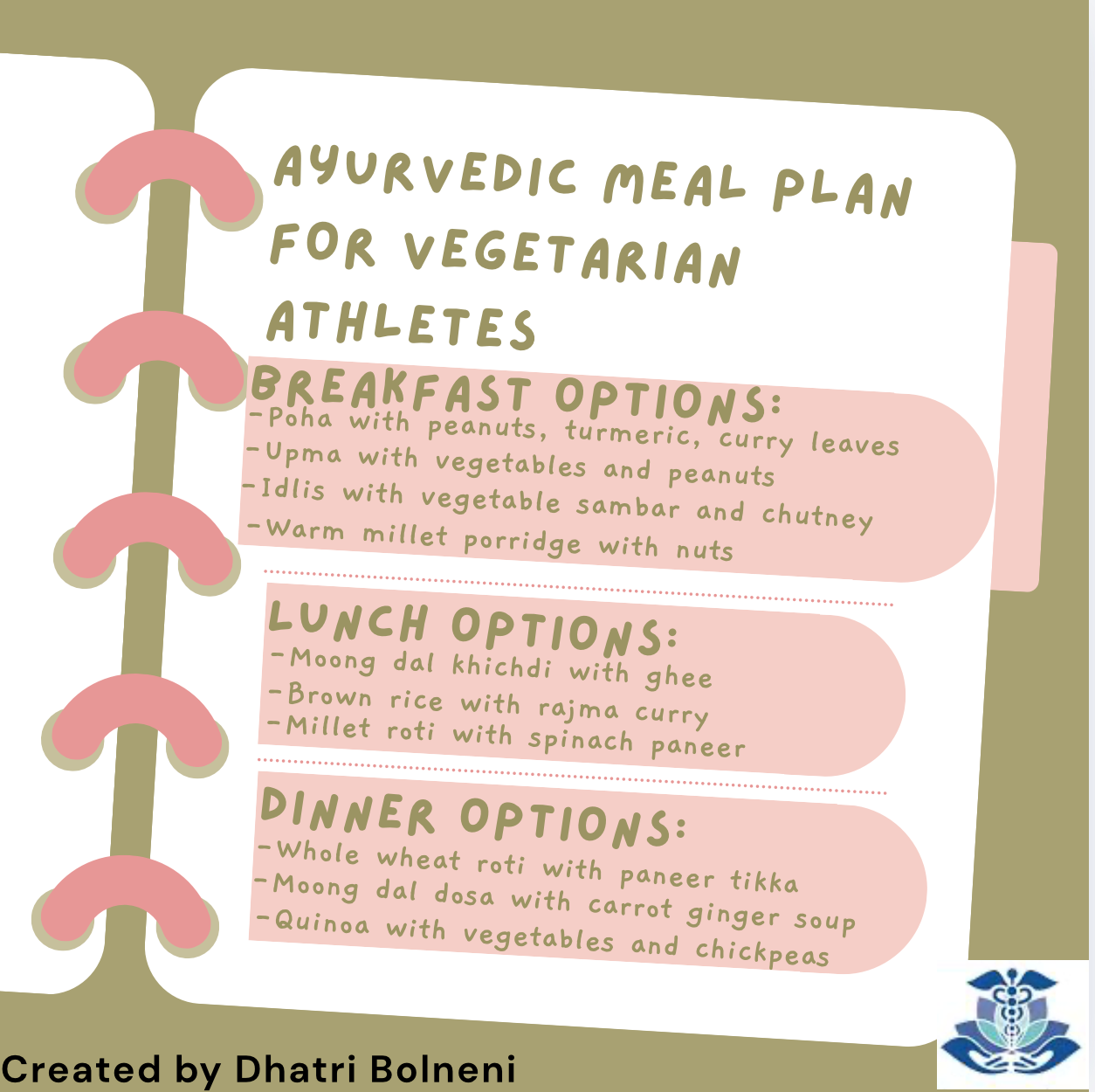
- Idli with sambar
- Moong dal or rajma with rice
- Chana dal with spinach and roti
- Yogurt with parathas
Idlis are light and fermented and packed with good bacteria for your gut while sambar brings in proteins from lentils and vitamins from vegetables. Rajma (red kidney beans) is rich in protein and with rice, it completes the protein profile. Chana (chickpeas) are packed with iron and protein and when added with spinach, it gives you even more iron and vitamin C. When eaten with rotis, your meal becomes complete.
Finally, yogurt (also frequently called curd) has probiotics that help with digestion and calcium which helps with bone and teeth strength while a paratha completes your meal and satisfies the soul.
Timing is important
As a vegetarian athlete, you need to make sure you eat at the right time with food that is easy to digest before and after a workout.
- 2-3 hours before your workout: It is important to have complex carbs and moderate protein (in a 3:1 ratio)
- 30-60 minutes before: Have a small amount of carbs such as a banana or a few dates to boost your body for your workout/sports activity. The most important rule of eating pre-workout is to not eat high fiber food such as beans or a salad as this will sit heavily in your stomach.
- Post workout (usually after 45-60 mins): You should eat fast digesting protein. It is really important to eat something following a workout because your muscles are primed and ready to receive fuel to repair the body and muscles (usually in a 5:1 ratio of carbs to protein).
During the rest of the day, also known as your recovery period, you need to load up on other macronutrients. Avoid eating processed food and focus on trying to eat balanced and clean meals. During this time, you should eat amino acids (protein) and healthy fats in justifiable amounts.
Common Protein Mistakes Vegetarian Athletes Make
There are many common mistakes that vegetarian athletes make when it comes to protein but the main mistake is undereating calories.
What many vegetarian athletes don’t know is that when shifting to more plant based or vegetarian diets, which are less calorie dense, it is important to add foods such as nuts, seeds, dairy, and whole grains to maintain adequate calorie intake while also getting enough protein.
Lots of vegetarian athletes also underestimate the amount of protein their body needs. Typically, these athletes need around 1.4-2 grams of protein per kg of body weight. When the total calorie intake is too low, the body will use the protein that you eat for energy rather than for muscle repair which can lead to muscle loss.
Another common mistake is ignoring digestion. As an athlete, you need to make sure you optimize digestion and you can do this through some simple things such as chewing well and taking in lots of water and electrolytes. You need to also manage fiber intake because when timed improperly it can be harmful for athletic performance. Cooking vegetables as opposed to eating raw vegetables is also helpful as you are able to break down cellulose which is hard for the gut to digest raw.
Some other frequent mistakes are eating too fast, eating right before a strenuous exercise, and eating on the go. You should also avoid eating when stressed as it can lead to over eating and weight gain which is not good for athletes.
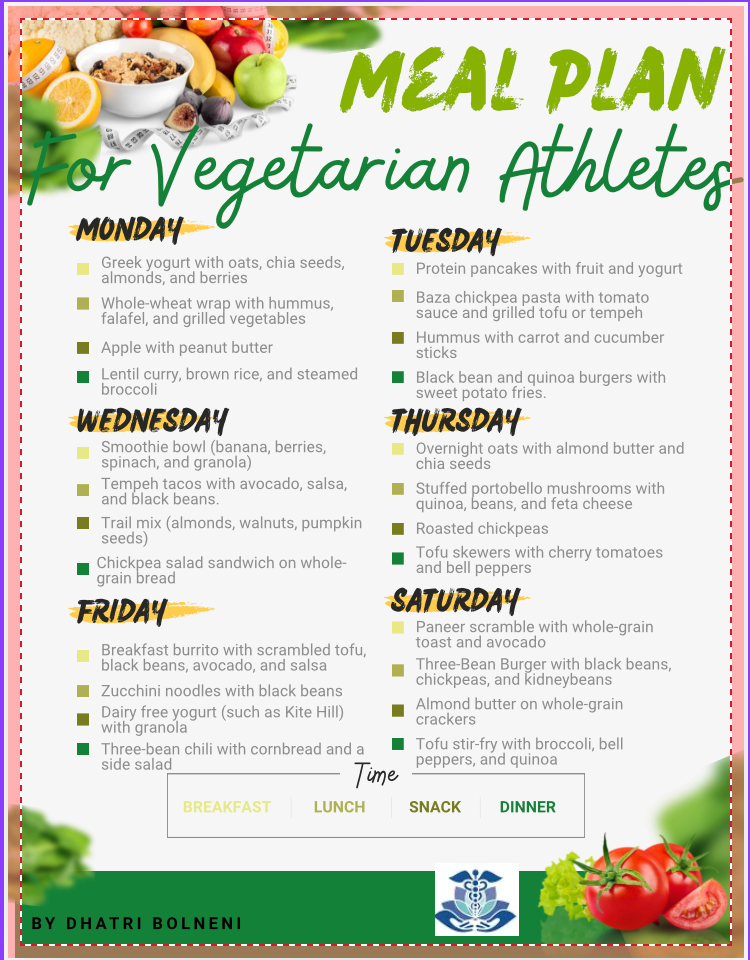
Meal plan for Vegetarian Athletes?
Sources:
- https://www.mdanderson.org/cancerwise/macronutrients-101–what-to-know-about-protein–carbs-and-fats.h00-159774078.html
- https://recreation.gsu.edu/2024/07/01/macro-guide/
- https://www.nutritionx.co.uk/nutrition-hub/nutrition/why-do-athletes-need-protein/
- https://www.forksoverknives.com/wellness/vegan-protein-guide-athletes/
- https://www.veganfoodandliving.com/features/vegan-athletes-plant-based-diet/
- https://medium.com/four-pursuits-ventures/lionel-messi-the-vegan-soccer-player-2e0e65b10795
- https://www.sundried.com/blogs/protein/plant-based-protein-a-comprehensive-guide-for-vegetarians-and-vegans
- https://www.metropolisindia.com/blog/preventive-healthcare/paneer-protein-per-100g-nutrition-benefits
- https://jaims.in/jaims/article/view/4480/6910
- https://www.ayurvedicliving.com/blog/ayurveda-for-athletes-enhancing-performance-and-recovery-naturally
- https://www.precisionnutrition.com/pbe-qna-jb
- https://pmc.ncbi.nlm.nih.gov/articles/PMC11022925/
- https://www.nomeatathlete.com/workout-nutrition/
- https://ritual.com/articles/complete-protein-foods
- https://nutritionsource.hsph.harvard.edu/what-should-you-eat/fats-and-cholesterol/types-of-fat/
- https://gluten.org/2019/10/17/gluten-free-grains/
Tell us what you think.
Dr. Minal Vazirani

Are you looking for a Triple Board Certified Doctor who gets Integrative, Functional, & Ayurvedic Medicine in NJ?
Message us or complete our intake form to get started with Dr. Vazirani.